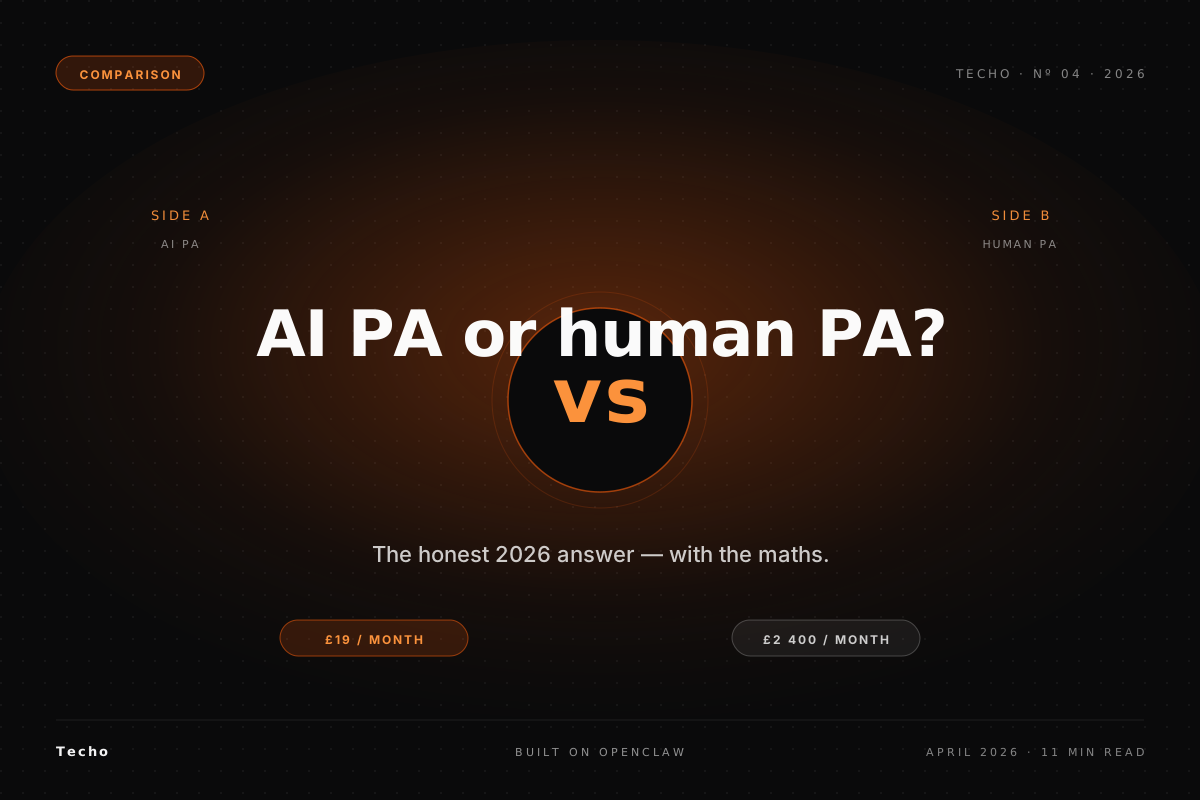
Do I hire someone, or do I build the system? In 2026 the system finally got cheap enough, and good enough, that the answer flipped for most people. This piece runs the actual numbers — what hiring a PA costs, what an AI concierge costs, and the hybrid pattern most experienced delegators land on.
§The one-line answer
The longer version, below, is where the trade-offs live: which tasks AI now does better, which a human still owns, how to size the hybrid.
01What hiring a PA actually costs in 2026
The salary line is the smallest part of the bill. To compare honestly with software, every loaded cost has to come into view.
Direct costs. A competent PA in London in 2026 lands at £36,000–£55,000 a year full-time. Outside London, knock 15–25% off. Part-time (15–20 hours a week) typically runs £18,000–£28,000 a year — not half of full-time, because skilled PAs price part-time at a premium.
Loaded costs. Employer National Insurance adds ~13.8%, auto-enrolment pension adds 3%, holiday pay covers 28 days, sick cover quietly costs another 2–4 weeks of productivity a year. Agency mark-up runs 15–25% on the gross. A £40k PA costs the household closer to £52–£55k a year all-in.
Onboarding tax. The first three months mostly go on teaching them your preferences, contacts, and edge cases — your time, often the most expensive line on the page. A good PA earns it back inside a year.
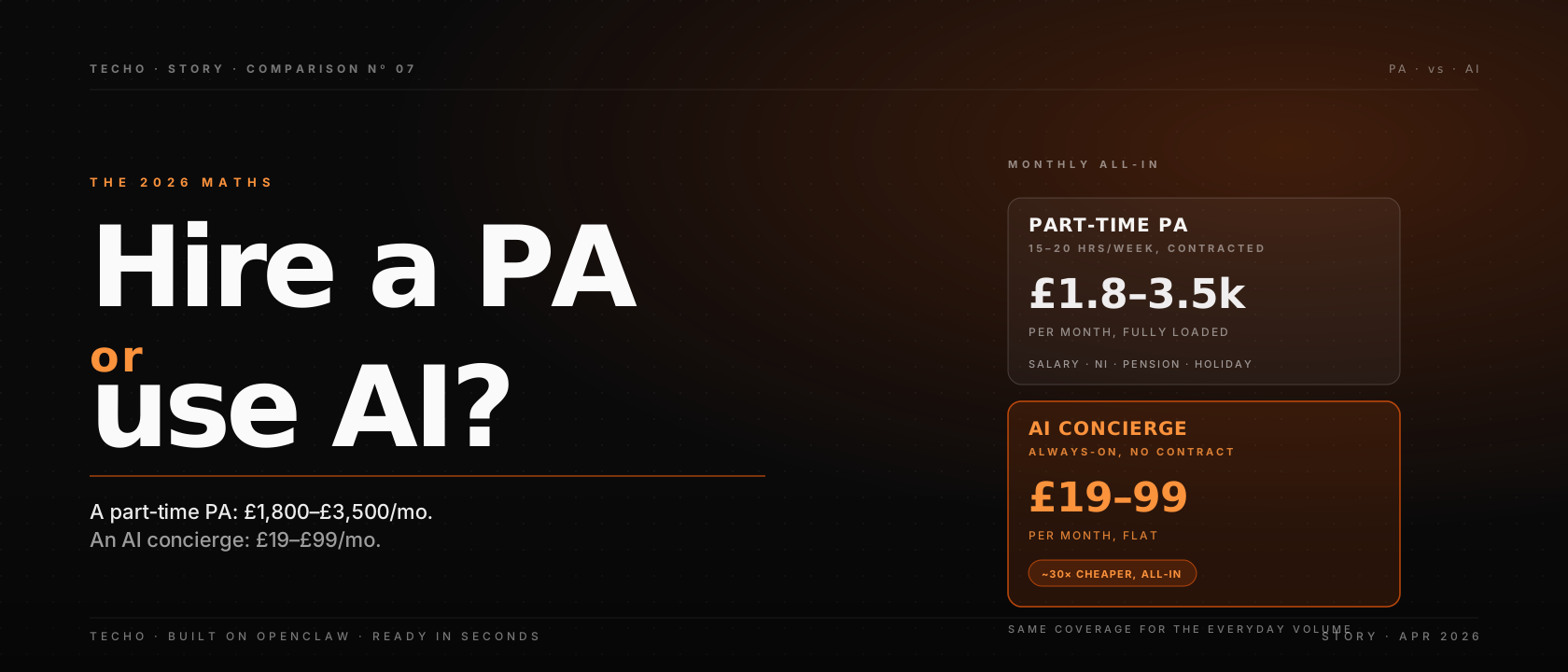
Monthly all-in, part-time: £1,800–£3,500. Full-time: £4,500–£6,500.
02What an AI concierge costs in 2026
The pricing shape is completely different. There is a flat monthly fee and, in some products, a small usage component on top.
Consumer tier sits at £19–£99 a month across the credible providers. Most of them give you unlimited chat, a fixed bundle of "actions" (a booking, a paperwork chase, an outbound call) per month, and either pay-as-you-go or a higher tier for power users.
Loaded costs. Effectively none. No employer NI, no holiday cover, no agency mark-up, no payroll. The product handles its own infrastructure, model spend, and maintenance.
Onboarding tax. A few hours to wire up calendars, payment cards, frequent-flyer accounts, address book, and preferences. After that, persistent memory means the second booking is materially better than the first — the system does not forget your dietary needs between sessions.
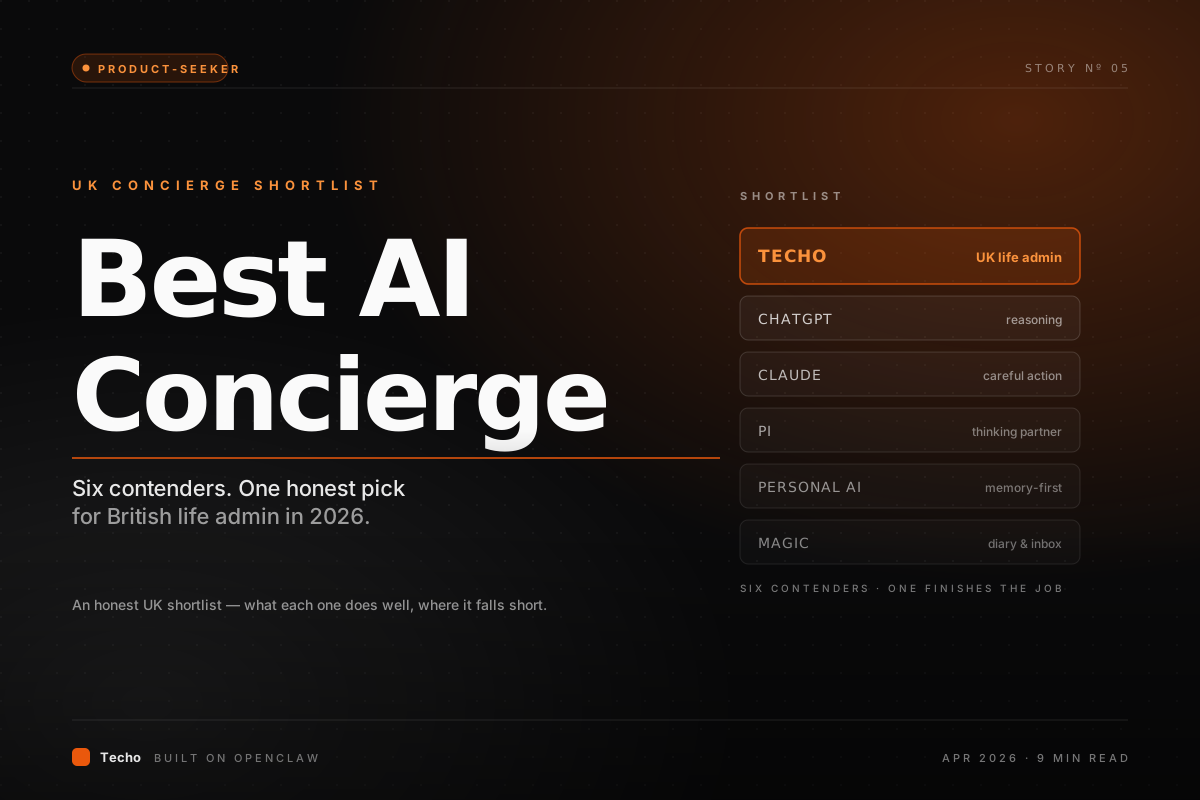
The best AI concierge apps in the UK for 2026 all sit in this band. Pricing differs less than you would expect; what differs is what the product is actually willing to do on your behalf. We covered the same trade-off from a different angle in AI personal assistant vs human PA.
03The 2026 maths, side by side
The numbers, lined up so the gap is visible without spin.
| Cost line | Part-time PA | AI concierge |
|---|---|---|
| Headline price | £1,500–£2,400 / mo gross salary | £19–£99 / mo flat |
| Employer NI & pension | £240–£420 / mo | £0 |
| Holiday & sick cover | ~10% productivity drag | £0 |
| Agency or recruiter fee | 15–25% of first-year gross, one-off | £0 |
| Onboarding | ~3 months of patient training | ~3 hours of preference set-up |
| Hours covered | 15–20 / week, contracted | Always-on, no contract |
| Realistic monthly all-in | £1,800–£3,500 | £19–£99 |
The headline ratio is roughly 30× in favour of AI. Even after generously crediting the PA for work AI cannot yet do, the maths still tilts heavily toward "AI is the default, humans are the exception" for the typical busy professional.
04Where the hours actually go
Cost is half of the comparison. The other half is what each one realistically gets done in a week.
Audit a typical week of life admin and the inventory looks like this: 4–6 hours of bookings (restaurants, travel, appointments), 2–3 hours of paperwork chasing (renewals, claims, statements), 2–3 hours of inbox triage and follow-ups, 1–2 hours of research, and a long tail of 5–15 minute interruptions that quietly add another 2 hours.
An AI concierge eats almost all of that. Bookings and rebookings are first-class for any serious product (see booking restaurants without calling for the mechanics). Renewals and statements run on integrations plus scheduled tasks. Inbox triage is classification and templated drafts, with the human only approving sends. The 5–15 minute interruptions — the bit that breaks your day — are exactly what a persistent assistant exists for.
What it does not do: chair a tense supplier call, walk a passport to the post office, or sit on hold with a council switchboard for two hours. Those land on a human.
05Quality of judgement — where humans still win
The honest list of what a person still does better, ranked by how often it actually shows up.
1. Physical presence
Meeting a courier. Walking documents to a notary. Sitting in for a delivery. Software cannot stand in your kitchen at 14:00.
2. Delicate social judgement
De-escalating a difficult family situation. Reading a room of suppliers. Knowing when a "no" needs to be soft and when it needs to be flat.
3. Executive shielding
Saying no on your behalf to people who outrank you politically. A human PA can absorb the awkwardness; AI cannot, yet.
4. Ad-hoc improvisation
Turning up in a city you do not know, finding a printer at 21:00, talking your way past a hotel desk. The long tail of edge cases still benefits from a person.
This is the list to staff, and only this list. If your weeks are full of these tasks, hire. If they are not — and for most professionals they are not — start with software.
06The hybrid pattern most people end up with
After eighteen months of watching busy people delegate seriously to AI, one pattern keeps showing up.
Layer one: the AI concierge does the volume. Bookings, paperwork, renewals, scheduling, follow-ups, research, expense capture, draft replies. Always-on. £19–£99 a month. Handles 80–90% of what used to land on a human.
Layer two: a small slice of human help for the edges. A few hours a week of a virtual assistant on a per-task tariff (£25–£40 an hour, £200–£500 a month), or a trusted local fixer paid by the job. Use them only for the four categories above.
Total monthly all-in: £250–£600. Versus £1,800–£3,500 for the part-time PA who tries to do all of it. More coverage, less money, and the human spends their time on work that genuinely benefits from a person.
07A decision framework you can use today
Run your week through five questions. Be honest, especially about the third.
- How many hours of life admin do you lose per week? Under 4: AI is plenty. 4–10: AI plus 2–4 hours of a virtual assistant. 10–20: AI plus a part-time PA. 20+: full-time PA, with AI as a force multiplier.
- What share is bookings, paperwork, follow-ups, and research? Over 70% — which is usual — AI eats. Do not pay a human salary for it.
- How much needs a person physically present? If "almost never", the case for a full-time PA collapses fast.
- How politically expensive is the wrong tone in outbound replies? Higher = more human in the loop. Lower = AI drafts and sends with light review.
- Will you spend an hour teaching the system how you live? Low: stay with a human, AI will feel generic. High: AI out-performs on volume because it never forgets.
Most people, run through these honestly, land in the same place: AI concierge as the always-on layer, a small budget for human help on the edges, a decisive cut of the salary line.
☰Cheatsheet: who wins what
Keep this open the next time you are tempted to advertise the role.
| Job | Part-time PA | AI concierge |
|---|---|---|
| Restaurant & travel bookings | Capable | Best fit |
| Renewals, statements, paperwork | Capable | Best fit |
| Inbox triage & draft replies | Slow at scale | Best fit |
| Research, comparison, shortlists | Capable | Best fit |
| Persistent memory of preferences | Builds over months | From day one |
| Always-on coverage (evenings, weekends) | Contracted hours | Best fit |
| Physical presence (couriers, notary) | Best fit | Not the job |
| Delicate social judgement | Best fit | Limited |
| Executive shielding | Best fit | Limited |
| Cost shape | £1,800–£3,500 / mo | £19–£99 / mo |
?FAQ
Is an AI concierge actually cheaper than a part-time PA?
For most individuals, yes — by a wide margin. A part-time human PA in the UK lands somewhere between £1,800 and £3,500 a month once you factor in salary, employer National Insurance, pension, holiday cover, and any agency fee. An AI concierge runs at £19–£99 a month for the consumer tier. The like-for-like comparison only narrows when you genuinely need 30+ hours of bespoke human judgement a week.
What can a human PA do that an AI concierge cannot?
Three things, mostly: physical-presence tasks (meeting a courier, walking documents to a notary), high-stakes social judgement (handling a delicate family situation, calming a difficult supplier), and chairing meetings on your behalf. Everything else — bookings, paperwork, research, scheduling, follow-ups, renewals — is now firmly in AI territory and increasingly cheaper to delegate to software.
Can I run a hybrid setup?
Yes, and it is the pattern most experienced delegators end up with. Use an AI concierge as the always-on layer that handles 80–90% of the volume — bookings, admin, research, follow-ups — and keep a small slice of human help (a few hours a week of a virtual assistant, or a trusted local fixer) for the things that genuinely need a person. Total monthly cost lands well under a full PA, with most of the coverage.
How many hours a week does an AI concierge actually save?
For a busy professional with normal life admin — bills, bookings, paperwork, scheduling, research, renewals — usage data from the first wave of AI concierges in 2025–26 shows 4 to 8 hours saved per week, mostly in 5–20 minute chunks that would otherwise have ended up on a Sunday. The compounding benefit is fewer late fees, fewer missed renewals, and a calmer inbox.
What if I already have a human PA — should I fire them?
Almost certainly not. The right move is to give the AI concierge the high-volume, low-judgement work that was eating your PA’s day — inbox triage, calendar Tetris, booking research, expense capture, paperwork chasing — and let your PA spend their hours on the work that genuinely benefits from a person. Most PAs prefer this; the AI eats the boring tier and the human keeps the interesting one.
How does Techo fit into this comparison?
Techo is the AI concierge built on OpenClaw — a productised, ready-to-use OpenClaw aimed at people who want the assistant without the platform sprint. It handles the layers a chat tool will not: persistent memory, scheduled tasks, real bookings, paperwork, and a human-in-the-loop fallback when judgement is required. Pricing sits in the consumer tier (£19–£99 / month) for the use cases this article describes.
§Where Techo fits
Techo is built on OpenClaw — a productised, ready-to-use OpenClaw aimed at the AI concierge use case. The maths above is the maths Techo was designed for: the always-on, persistent layer that handles the 80% of work which used to consume a salary line. What Techo adds on top of OpenClaw is the operations layer (managed memory, sandboxes, MCP, observability, scheduled tasks, a UI) plus a human-in-the-loop fallback for tasks that genuinely benefit from a person.
If you are weighing up the spend, our piece on the best AI concierge apps in the UK for 2026 is the side-by-side product view. Techo’s AI Concierge is the version we run ourselves — built on OpenClaw, optimised for British life admin first.
The mistake is hiring a person to do the part of the job that was always going to be software. Start with the assistant that never forgets you, and keep a person for the work that only a person should do.
The 2026 maths is a spreadsheet with two rows and a wide gap between them. Run your week through it, pick the layer that fits the volume, and stop paying salary for work the assistant now handles before breakfast.